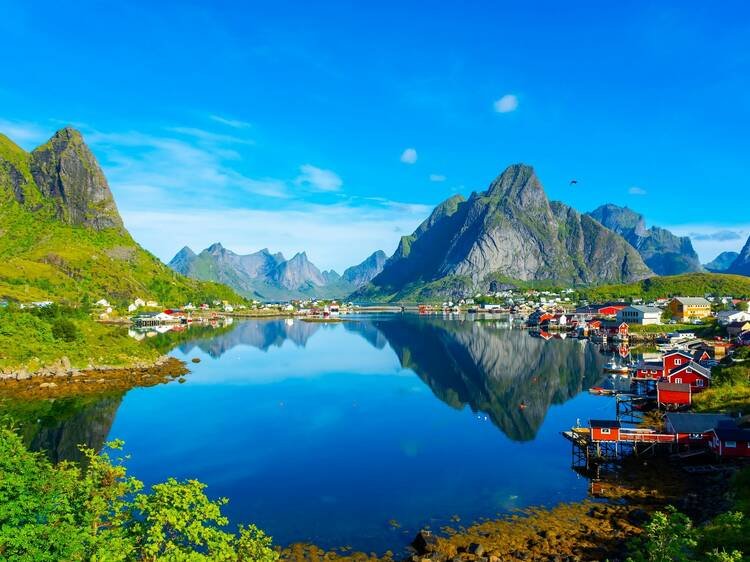
What this travel file helps you decide
Paris is lovely. Santorini is stunning. But have you tried getting a hotel room in either during peak season without selling a kidney? If you’re planning a Europe trip for 2026, I’d genuinely encourage you to look past the obvious names — because some of the continent’s underrated…
Paris is lovely. Santorini is stunning. But have you tried getting a hotel room in either during peak season without selling a kidney? If you’re planning a Europe trip for 2026, I’d genuinely encourage you to look past the obvious names — because some of the continent’s underrated European villages deliver the same magic without the queues or the price tags.
Quick answer: the most underrated European villages for 2026 include Hallstatt’s quieter neighbor Gosau in Austria, Comillas in Spain, Karlovy Vary’s smaller sister towns in Czechia, and Sirmione on Italy’s Lake Garda — all offering classic European charm at a fraction of the crowd and cost.
Gosau, Austria — Hallstatt’s Quiet Cousin
Everyone floods to Hallstatt now, thanks to that one photo everyone’s seen a thousand times. Twenty minutes away sits Gosau, with arguably better mountain views and a lake that’s just as photogenic — minus the tour buses. I stayed two nights here and barely saw another foreigner.
Comillas, Spain
Tucked along Spain’s northern Cantabrian coast, Comillas has a Gaudí building that gets a fraction of the attention his Barcelona work does. The beaches here are genuinely gorgeous, and a seafood dinner will run you half what you’d pay in San Sebastián.
Sirmione, Italy
Lake Garda’s bigger towns like Riva del Garda get the crowds, but Sirmione — a small peninsula town with Roman ruins and thermal springs — somehow stays calmer, even in July. Go at sunset when the day-trippers from Verona have already left.
- Roman ruins (Grotte di Catullo) — free to explore the grounds
- Thermal spa access from around €25
- Ferry connections to other Garda towns run frequently
Rovinj, Croatia
Croatia’s coast has gotten expensive and crowded fast — Dubrovnik especially. Rovinj, further north in Istria, has the same pastel-colored old town charm with noticeably better prices and fewer cruise ship crowds descending at once.
Piran, Slovenia
Slovenia barely makes anyone’s Europe shortlist, which honestly baffles me. Piran, on the tiny Slovenian coastline, feels like a mini-Venice without any of the tourist fatigue. I’ve recommended this town to at least a dozen friends now.
Csesznek, Hungary
A castle village well outside the usual Budapest day-trip radius. Small, sleepy, and cheap — a meal here costs a third of what you’d pay in the capital.
Monschau, Germany
Near the Belgian border, Monschau has half-timbered houses that look like something out of a storybook, and somehow doesn’t get anywhere near the tourist traffic of the Rhine Valley towns.
Kotor’s Quieter Neighbors, Montenegro
Kotor itself has gotten busy with cruise ships in recent years. Perast, a short drive up the bay, gives you the same fjord-like scenery with a fraction of the noise.
Alberobello’s Nearby Towns, Italy
Alberobello’s famous trulli houses draw crowds daily. Locorotondo, just 15 minutes away, has a similar whitewashed charm and a much calmer town square.
Guimarães, Portugal
Often called the birthplace of Portugal, Guimarães gets overshadowed entirely by Porto and Lisbon. The medieval old town is a UNESCO site, and hotel prices here run noticeably lower than the bigger cities.
Planning Tips for Visiting Underrated Villages
- Rent a car if possible — many of these villages have limited public transport
- Book accommodation directly with the guesthouse; you’ll often get a better rate than through booking platforms
- Visit shoulder season (May or September) even in “quiet” towns for the best weather-to-crowd ratio
[link to related guide about budget Europe trip planning here]
FAQ
Are underrated European villages safe to visit alone? Yes, generally very safe — often safer than major cities simply due to lower crime rates in smaller towns.
What’s the cheapest underrated village to visit in Europe? Csesznek in Hungary and Comillas in Spain tend to offer the lowest overall costs for food and lodging.
Do I need to speak the local language? Not necessarily, though a few basic phrases go a long way in smaller villages where English isn’t as common as in major cities.
Is public transport reliable to reach these villages? It varies a lot — coastal towns like Piran and Rovinj are easier to reach by bus, while inland spots like Gosau or Csesznek are much easier with a rental car.
When’s the best time to visit for fewer crowds? May, June, and September consistently offer the best balance of good weather and thinner crowds.
Conclusion
If your Europe trip planning always defaults to the same five cities, 2026 might be the year to break the habit. These underrated European villages aren’t secrets exactly — they’re just overlooked, which honestly works in your favor. Pick two or three from this list, build a slower itinerary around them, and you’ll probably come home with better stories than anyone who just did the usual capital-city circuit.
Route Fit
Check whether the location, timing and travel pace match the way you actually want to move.
Proof Check
Verify live prices, entry rules, transport schedules and opening hours before committing.
Backup Tag
Keep one flexible alternative for weather, delays, sold-out inventory or changing local conditions.
Pack the decision, not unnecessary complexity.
Use this guide as a working travel file, then verify the few details that can change close to departure.

ehyperlinkinfo@gmail.com
Practical travel research focused on clearer routes, better stays and more confident local decisions.